

Accurate & Verified 2025 New KCNA Answers As Experienced in the Actual Test!
KCNA Certification Sample Questions certification Exam
NEW QUESTION # 31
You are running a service in Kubernetes that uses a persistent volume. You need to ensure that the volume is automatically cleaned up when the service is deleted. Which of the following approaches would you use?
- A. There is no automatic way to clean up a persistent volume when a service is deleted; it needs to be done manually.
- B. Use a DaemonSet to run a cleanup script that removes the volume when the service is deleted
- C. Configure a CronJob to periodically check for unused volumes and delete them
- D. Set the 'persistentVolumeReclaimPolicy' to 'Delete' in the PersistentVolumeClaim
- E. Delete the PersistentVolumeClaim manually when the service is deleted
Answer: D
Explanation:
Setting the 'persistentVolumeReclaimPolicy' to 'Delete' in the PersistentVolumeClaim ensures that the volume is automatically deleted when the PVC is deleted. This is the most straightforward and recommended approach for cleaning up persistent volumes in Kubernetes.
NEW QUESTION # 32
Explain the concept of 'storage provisioners' in Kubernetes and how they are used to create and manage PersistentVolumes. List some popular storage provisioners and their associated storage types.
- A. Storage provisioners in Kubernetes are plugins that define the logic for creating and managing PersistentVolumes. They act as intermediaries between the Kubernetes cluster and underlying storage systems. Popular Storage Provisioners: kubernetes.io/gce-pd. Provision Google Cloud Persistent Disks kubernetes-io/aws-ebs: Provision Amazon Elastic Block Storage kubernetes.io/azure-disk: Provision Azure Managed Disks kubernetes.io/local-path: Use host directories as storage kubernetes. io/glusterfs: Use GlusterFS as a distributed file system kubernetes.io/cephfs: Use Ceph RBD as a block storage solution
- B. Storage provisioners in Kubernetes are plugins that define the logic for creating and managing PersistentVolumes. They act as intermediaries between the Kubernetes cluster and underlying storage systems. Popular Storage Provisioners: kubernetes.io/gce-pd: Provision Google Cloud Persistent Disks kubernetes.io/aws-ebs: Provision Amazon Elastic Block Storage kubernetes.io/azure-disk: Provision Azure Managed Disks kubernetes.io/local-path: Use host directories as storage kubernetes. io/glusterfs: Use GlusterFS as a distributed file system kubernetes.io/cephfs: Use Ceph RBD as a block storage solution
- C. Storage provisioners in Kubernetes are plugins that define the logic for creating and managing PersistentVolumes. They act as intermediaries between the Kubernetes cluster and underlying storage systems. Popular Storage Provisioners: kubernetes.io/gce-pd. Provision Google Cloud Persistent Disks kubernetes.io/aws-ebs: Provision Amazon Elastic Block Storage kubernetes.io/azure-disk: Provision Azure Managed Disks kubernetes.io/local-path: Use host directories as storage kubernetes.io/glusterfs: Use GlusterFS as a distributed file system kubernetes.io/cephfs: Use Ceph RBD as a block storage solution
- D. Storage provisioners in Kubernetes are plugins that define the logic for creating and managing PersistentVolumes. They act as intermediaries between the Kubernetes cluster and underlying storage systems. Popular Storage Provisioners: kubernetes.io/gce-pd- Provision Google Cloud Persistent Disks kubernetes-io/aws-ebs: Provision Amazon Elastic Block Storage kubernetes.io/azure-disk. Provision Azure Managed Disks kubernetes.io/local-path: Use host directories as storage kubernetes.io/glusterfs: Use GlusterFS as a distributed file system kubernetes.io/cephfs: Use Ceph RBD as a block storage solution
- E. Storage provisioners in Kubernetes are plugins that define the logic for creating and managing PersistentVolumes. They act as intermediaries between the Kubernetes cluster and underlying storage systems. Popular Storage Provisioners: kubernetes.io/gce-pd. Provision Google Cloud Persistent Disks kubernetes.io/aws-ebs: Provision Amazon Elastic Block Storage kubernetes.io/azure-disk: Provision Azure Managed Disks kubernetes.io/local-path: Use host directories as storage kubernetes.io/glusterfs: Use GlusterFS as a distributed file system kubernetes.io/cephfs: Use Ceph RBD as a block storage solution
Answer: B
Explanation:
Storage provisioners in Kubernetes are plugins that define the logic for creating and managing PersistentVolumes. They act as intermediaries between the Kubernetes cluster and underlying storage systems. Each provisioner is responsible for interacting with a specific storage system, like Google Cloud Persistent Disks, Amazon Elastic Block Storage, Azure Managed Disks, GlusterFS, Ceph RBD, or even local directories on the host machine. The list in option A provides some popular provisioners and their associated storage types.
NEW QUESTION # 33
Fluentd is the only way to export logs from Kubernetes cluster or applications running in cluster
- A. False
- B. True
Answer: A
Explanation:
https://github.com/cncf/landscape#trail-map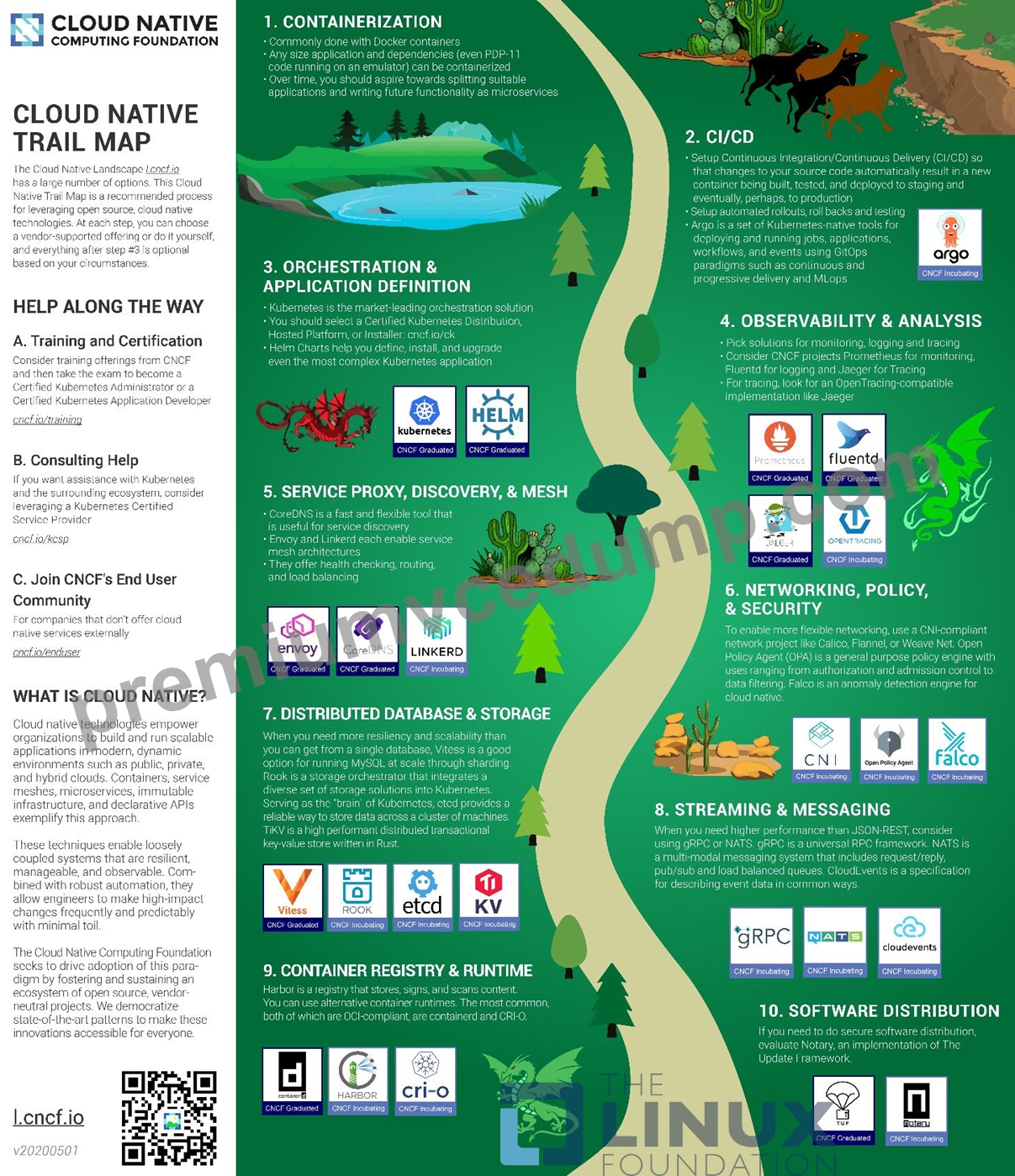
NEW QUESTION # 34
Which statement is true about Pod Networking?
- A. All pod requires an external DNS server to get the hostname
- B. All containers in a pod share a single IP address
- C. All containers in a pod get a unique IP address
- D. All pod requires NAT to get a unique IP address.
Answer: B
Explanation:
https://kubernetes.io/docs/concepts/workloads/pods/#pod-networking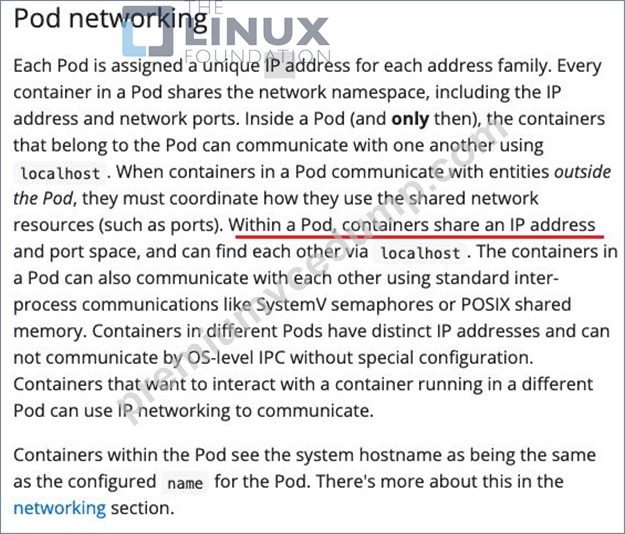
NEW QUESTION # 35
Which tool is built on the GitOps toolkit?
- A. Jenkins-X
- B. Travis CI
- C. Flux
- D. Jenkins
- E. GitHub Workflow & Actions
- F. ArgoCD
Answer: C
Explanation:
https://fluxcd.io/#gitops-toolkit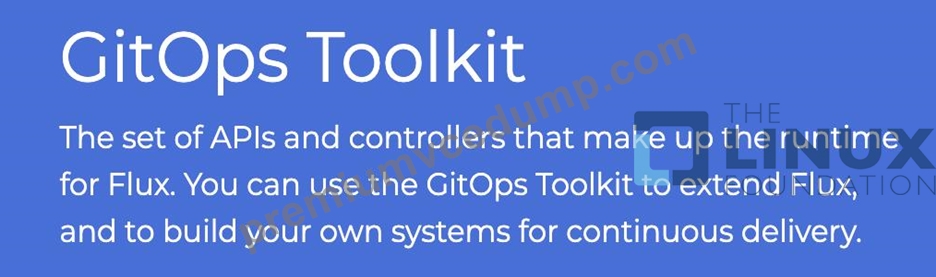
Note: Argo CD is a GitOps tool and not using GitOps toolkit
NEW QUESTION # 36
What does CNCF stand for?
- A. Cloud Native Cloud Foundation
- B. Cloud Native Container Foundation
- C. Cloud Native Computing Foundation
Answer: C
Explanation:
https://www.cncf.io/about/who-we-are/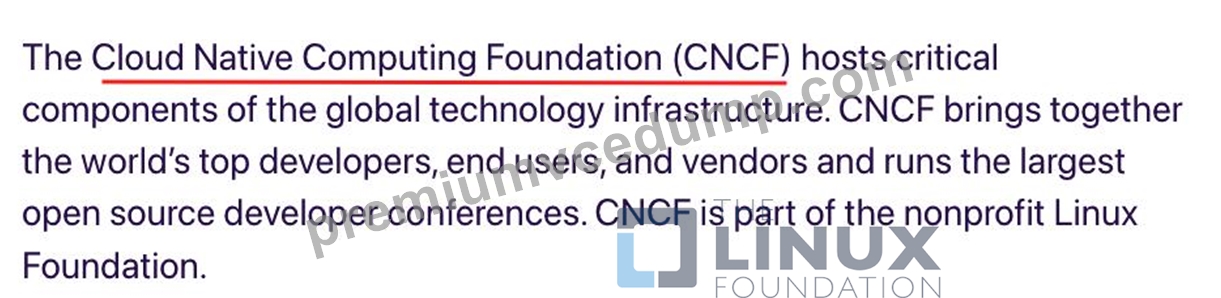
NEW QUESTION # 37
You are managing a large Kubernetes cluster with multiple namespaces. You want to control access to resources within different namespaces. Which of the following mechanisms can be used to achieve fine-grained access control?
- A. Network Segmentation
- B. Service Accounts
- C. Pod Security Policies
- D. Role-Based Access Control (RBAC)
- E. Network policies
Answer: C,D
Explanation:
Both Role-Based Access Control (RBAC) and Pod Security Policies (PSP) are used for managing access to resources within Kubernetes. RBAC provides fine-grained permissions based on roles and users, while PSPs define security constraints for Pods, limiting their capabilities and access to resources.
NEW QUESTION # 38
Which of the following Kubernetes components is responsible for authenticating and authorizing users who access the Kubernetes API?
- A. kube-proxy
- B. apiserver
- C. etcd
- D. kubelet
- E. kubectl
Answer: B
Explanation:
The Kubernetes API server (apiserver) is responsible for authenticating and authorizing users who access the Kubernetes API. It enforces access control rules based on RBAC (Role-Based Access Control) configurations. The apiserver acts as the central control point for all Kubernetes interactions, ensuring secure and controlled access to cluster resources.
NEW QUESTION # 39
What is container orchestration?
- A. Spinning a new containers to replace old ones
- B. Adding code to a container image so it can run as a container
- C. Using automation to manage containers
- D. Packaging code and all of its dependencies into a single executable
Answer: C
Explanation:
https://www.redhat.com/en/topics/containers/what-is-container-orchestration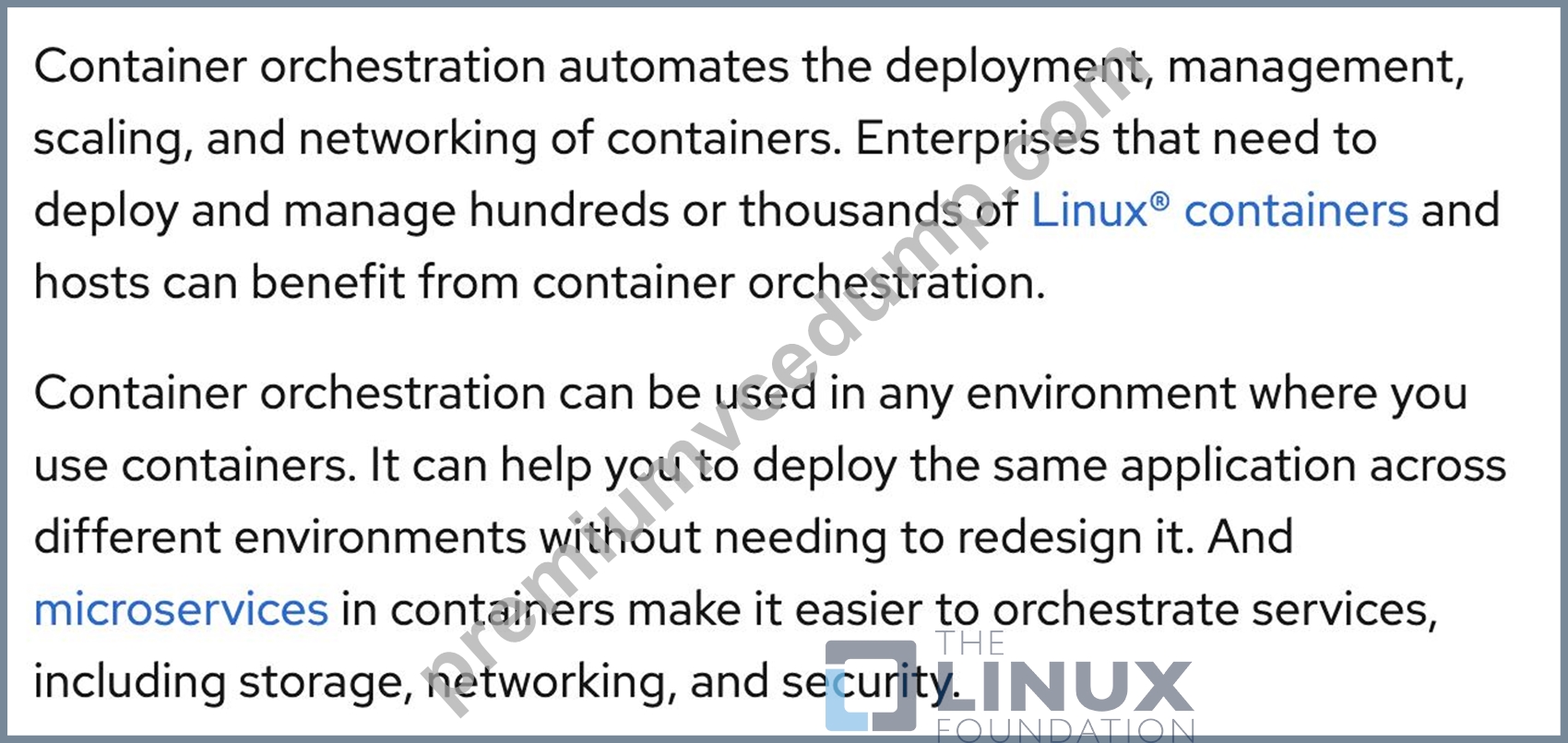
NEW QUESTION # 40
You are running a containerized application that requires access to a persistent storage volume. Which of the following Kubernetes objects is primarily used to define the storage request and access modes?
- A. pod
- B. Deployment
- C. Service
- D. PersistentVolumeClaim
- E. ConfigMap
Answer: D
Explanation:
A 'PersistentVolumeClaim• (PVC) is the mechanism used to request and manage persistent storage within Kubernetes. It defines the storage requirements (size, access mode, etc.) for a Pod. While the 'Pod' uses the PVC, the PVC itself describes the storage request, not the Pod.
NEW QUESTION # 41
What is the primary function of the Kubernetes control plane?
- A. Schedules Pods to nodes based on resource availability and node affinity
- B. Manages the lifecycle of Pods, ensuring that they are running as intended.
- C. Provides a central point of control and management for the Kubernetes cluster.
- D. Provides a secure and reliable connection between the Kubernetes control plane and nodes.
- E. Enables communication between Pods and services within a Kubernetes cluster.
Answer: C
Explanation:
The Kubernetes control plane is responsible for managing the overall state and behavior of the cluster- It provides a central point of control, ensuring that all components are running as expected and that the cluster is operating efficiently.
NEW QUESTION # 42
Which of the following is an advantage a cloud-native microservices application has over monolithic applications?
- A. Cloud-native microservice applications tend to be easier to scale and perform updates on.
- B. Cloud-native microservice applications tend to be easier to troubleshoot.
- C. Cloud-native microservices applications tend to be faster and more responsive than monolithic applications.
Answer: A
Explanation:
Cloud-native applications tend to be microservice base, they have individual services that can be independently scaled, updated and rolled back. This makes scaling and update operations simpler and less risky.
NEW QUESTION # 43
Which of the following computing model doesn't require you to provision infrastructure?
- A. Bare Metal
- B. Compute Engine
- C. Serverless
- D. None of the above
- E. Virtual Machines
Answer: C
Explanation: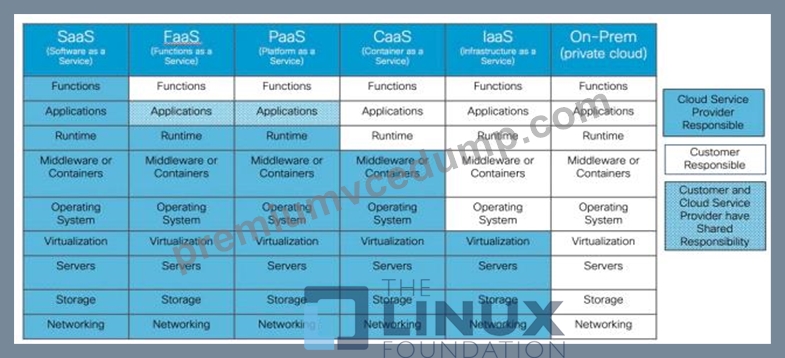
NEW QUESTION # 44
Which component of the kubernetes control-plane (master) are all requests to deploy and manage objects posted to?
- A. ETCD
- B. Kube-proxy
- C. Controller Manager
- D. Kubelet
- E. API Server
Answer: E
Explanation:
https://kubernetes.io/docs/reference/command-line-tools-reference/kube-apiserver/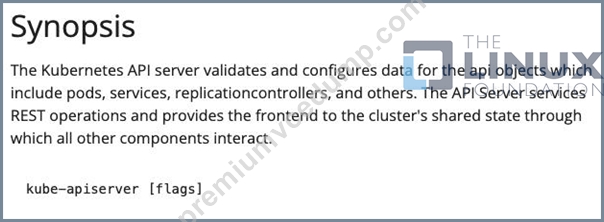
NEW QUESTION # 45
You have a Kubernetes Deployment that defines 3 replicas of your application. During a deployment, one of the replicas fails to start. What happens to the deployment?
- A. Kubernetes automatically restarts the failed replica.
- B. The deployment scales down to 2 replicas.
- C. The deployment remains in a failed state.
- D. The deployment fails and rolls back to the previous version.
- E. The deployment continues, but with only 2 healthy replicas.
Answer: A
Explanation:
Kubernetes' self-healing capabilities ensure high availability. If a pod fails, Kubernetes will automatically restart it, attempting to bring the deployment back to the desired replica count.
NEW QUESTION # 46
How can you achieve cost optimization in the cloud environment?
- A. Use Spot Instances
- B. Use Reserved Instances
- C. Use Bare Metal
- D. Use On Demand instances
Answer: B
NEW QUESTION # 47
Consider the followin Pod Securit Polic definition:
Which of the following statements is TRUE about this Pod Security Policy?
- A. The policy allows pods to mount hostPath volumes.
- B. The policy allows pods to access the host network.
- C. The policy allows pods to run as any user ID.
- D. The policy allows pods to run as specific user IDs, mount configMaps and secrets, and access specific capabilities.
- E. The policy allows pods to access host processes.
Answer: D
Explanation:
This Pod Security Policy restricts pods to run as specific user IDs (1000 and 1001 ), allows them to mount configMaps and secrets, and grants access to specific capabilities ('SYS_ADMIN' and 'CHOWN'). It does not allow access to the host network, host processes, or host PID namespace. This policy is designed to enforce security restrictions and prevent potential vulnerabilities within the Kubernetes cluster.
NEW QUESTION # 48
You're developing a new microservice for an application running on Kubernetes. The service requires access to a database hosted in a separate Kubernetes cluster. How would you ensure secure communication between your microservice and the database?
- A. Use a shared secret stored in an environment variable within the microservice pod
- B. Configure a Kubernetes Ingress resource to route traffic to the database
- C. Configure a service mesh to handle encryption and authentication between the services.
- D. Set up a VPN connection between the two Kubernetes clusters-
- E. Use an API gateway to proxy requests between the services.
Answer: C
Explanation:
A service mesh like Istio or Linkerd provides a layer of abstraction that can handle encryption, authentication, and authorization bewveen microservices within and across Kubernetes clusters. It allows for secure communication without exposing sensitive credentials directly within the microservice code.
NEW QUESTION # 49
Which of the following is used to request storage in Kubernetes?
- A. StorageClasses
- B. PersistentVolumeClaim 'PVC'
- C. PersistentVolume 'PV'
- D. Container Storage Interface 'CSI'
Answer: B
Explanation:
https://kubernetes.io/docs/concepts/storage/persistent-volumes/
NEW QUESTION # 50
You have a Kubernetes cluster running on AWS. You want to configure a persistent volume claim (PVC) that uses an AWS EBS volume for storage. Which annotation can be used to specify the EBS volume type?
- A. volume.beta.kubernetes.io/aws-ebs-volume-encrypted
- B. volume.beta.kubernetes.io/aws-ebs-volume-size
- C. volume.beta.kubernetes.io/storage-class
- D. volume.beta.kubernetes.io/aws-ebs-volume-type
- E. volume.beta.kubernetes.io/storage-provisioner
Answer: D
Explanation:
The annotation •volume.beta.kubernetes.io/aws-ebs-volume-type• is used to specify the EBS volume type (e.g., 'gp2 , 701', 'standard') when using an AWS EBS volume for persistent storage. Option 'A' is used to specify the storage class for the PVC. Option 'B' specifies the storage provisioner, which is responsible for creating the volume. Option 'D' is used to specify the size of the EBS volume. Option 'E' is for specifying whether the EBS volume should be encrypted.
NEW QUESTION # 51
The Kubernetes API provides an interface for storing objects. Which of the following describes the type of objects stored by the Kubernetes API?
- A. ETCD
- B. Containers
- C. YAML
- D. REST
Answer: D
Explanation:
Kubernetes objects are RESTful objects.
NEW QUESTION # 52
You are developing a microservices application where each service requires a specific configuration. Which Kubernetes feature best addresses this need for service-specific configuration?
- A. ConfigMaps
- B. Persistent Volumes
- C. Secrets
- D. Namespaces
- E. Deployments
Answer: A
Explanation:
ConfigMaps allow you to store key-value pairs of configuration data, which can be easily mounted as environment variables or files within your containers. This is ideal for handling service-specific configurations.
NEW QUESTION # 53
kubeadm is an administrative dashboard for kubernetes
- A. False
- B. True
Answer: A
Explanation:
https://kubernetes.io/docs/reference/setup-tools/kubeadm/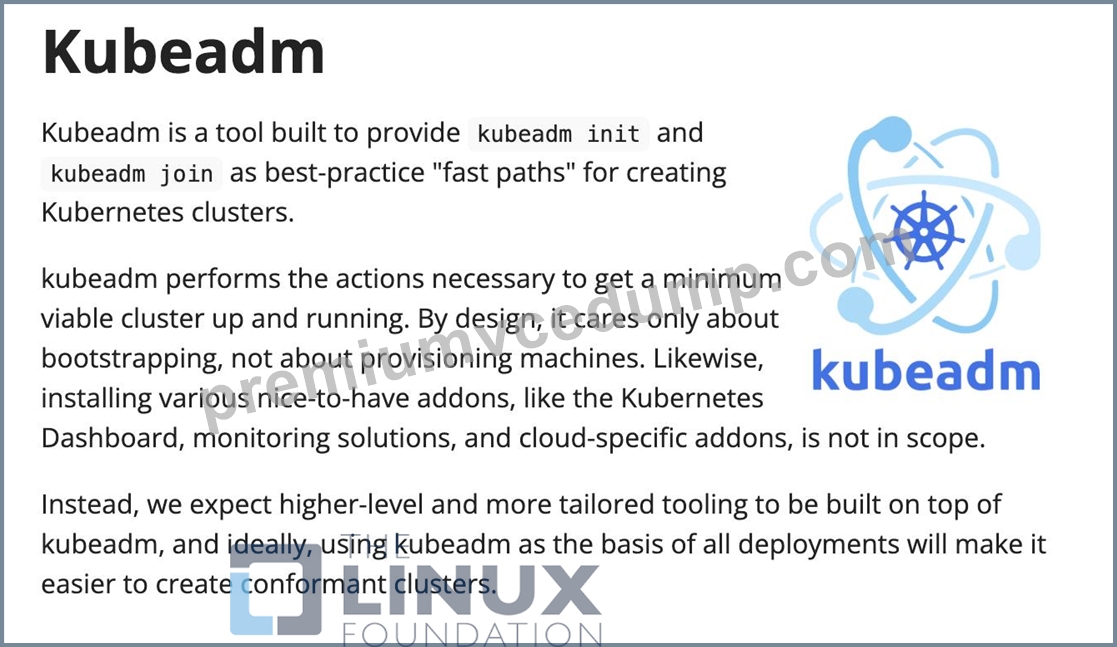
NEW QUESTION # 54
You are running a stateful application on Kubernetes that requires persistent data storage. Which of the following Kubernetes storage classes would be most suitable for this scenario?
- A. Ephemeral
- B. Persistent Volumes
- C. Standard
- D. Local Persistent Volumes
- E. HostPath
Answer: B
Explanation:
Persistent Volumes (PVs) are the most suitable storage class for stateful applications- They guarantee persistent data storage across pod restarts and provide a consistent interface for accessing the data
NEW QUESTION # 55
......
The Linux Foundation KCNA exam is designed to test the candidate's knowledge and understanding of Kubernetes and cloud-native technologies. It covers a range of topics such as deploying, managing, and scaling applications in Kubernetes, understanding Kubernetes architecture and components, and configuring Kubernetes networking and security. KCNA exam also tests the candidate's knowledge of containerization technologies such as Docker and container orchestration tools like Helm.
Certification Topics of KCNA Exam PDF Recently Updated Questions: https://examsites.premiumvcedump.com/Linux-Foundation/valid-KCNA-premium-vce-exam-dumps.html